
Explore Georgia Tours
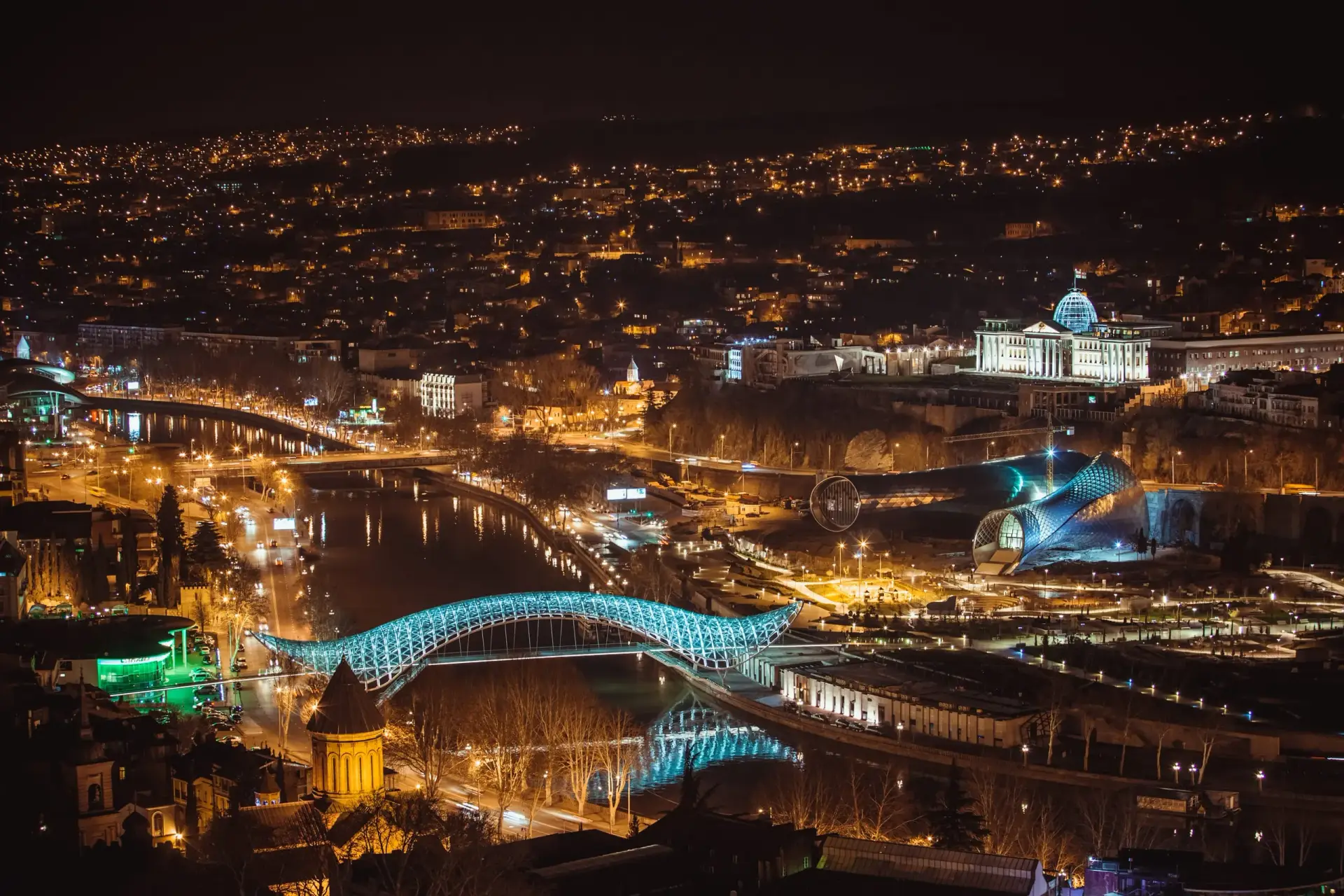
Tbilisi Old Town illuminated at night with historic streets in Georgia capital
Travel PlanningSafetyTravel Planning

Is Georgia Safe to Visit in 2026? An Honest Local Guide

E
Explore Georgia Tours Team
Local Tour Operators
12 min read

Georgia sits near the top of most safety rankings, and violent crime against tourists is genuinely rare. But the picture isn't perfect. This guide from a Tbilisi-based operator covers the protests, the driving culture, the stray dogs, and the two regions you can't enter, straight from the ground.

Is Georgia Safe to Visit Right Now? The Short Answer

"Is Georgia safe to visit?" is the question we get most often on WhatsApp, usually from someone whose relatives have confused us with a war zone. So here's the short answer from people who drive these roads every week: yes, Georgia is one of the safer countries you can pick for a first trip to this part of the world. And no, that's not tour-operator spin. The numbers back it up.

Numbeo's crowd-sourced crime rankings have placed Georgia among the 25 safest of the 140-plus countries they track for years now, usually hovering around 20th or 21st. Tbilisi itself scores in the mid-70s on the same site's city safety index, which puts it above Rome, Paris, Brussels, and most American cities. Violent crime against tourists is rare enough that when something does happen, it makes the national news.

Our own experience matches that. In years of running tours, the worst incidents our guests have reported are a taxi driver rounding up a fare and one stolen phone at a crowded bar. That's it.

But an honest safety guide can't stop there. Georgia has political demonstrations that make dramatic headlines, a driving culture that genuinely deserves your attention, and two breakaway regions you cannot enter. This guide covers all of it, including the parts that don't flatter us.

What Petty Crime Actually Looks Like Here

Pickpocketing exists, but at a much lower level than Barcelona or Prague. The places to keep your phone in a front pocket are the Dry Bridge flea market on weekends, the metro at rush hour, and the crowds around Meidan Square in Old Tbilisi on summer evenings. Standard big-city habits are enough.

The most common way tourists actually lose money is far more boring: taxi overcharging. A ride from the airport to the center should cost 30-40 GEL (about $11-15) on the Bolt app. Street cabs at the arrivals hall will try for 100. Download Bolt before you land and the problem disappears.

One real scam to know about targets solo men. A friendly stranger, sometimes an attractive woman, invites you to a specific bar around Shardeni Street, and the bill arrives at several hundred dollars with large men near the door. It's an old trick that police have cracked down on, but it still surfaces. The rule is simple. You pick the bar, not your new friend.

Tip: Georgia is still largely a cash-light, card-friendly country. Pay by card where you can, keep 50-100 GEL in small notes for markets and village shops, and you'll never need to carry a wad worth stealing.

About Those Protests in Tbilisi

You've probably seen footage of large demonstrations in Tbilisi. They're real, they've recurred in waves over the past few years, and pretending otherwise would insult your intelligence. Here's the context the headlines skip.

The protests concentrate in one specific place: the stretch of Rustaveli Avenue in front of the Parliament building, mostly in the evening. They are political demonstrations by Georgians about Georgia's future, and they are not aimed at foreigners in any way. Tourists aren't targets, and daily life two streets away carries on completely as normal. Restaurants stay full, the metro runs, and guests of ours have often walked past a demonstration on the way to dinner without incident.

That said, use common sense. On big protest nights, skip the immediate block around Parliament. Police occasionally use crowd-dispersal measures there, and you don't want to be a bystander in that specific 300-meter zone. Rustaveli metro station sometimes closes during large gatherings, so plan around Liberty Square station instead.

Thing is, demonstrations are also a normal part of civic life here, the way they are in Paris. If you see one from a distance, you're watching democracy argue with itself, not a safety emergency.

The Real Risk Is the Roads

If we're ranking actual dangers honestly, road safety comes first by a wide margin. Not crime, not protests. Driving.

Georgian driving culture is aggressive. Overtaking on blind curves is common, lane markings get treated as decoration, and speed limits are more of a suggestion outside the cities. Add mountain roads with no guardrails, cows wandering onto regional highways, and winter ice above 2,000 meters, and you get the one category where Georgia performs genuinely worse than Western Europe. Road fatality rates here run roughly double the EU average.

What does that mean in practice? Three things.

  • Wear your seatbelt in the back seat too. Locals often don't. Do it anyway.
  • Think twice about self-driving, especially the Kazbegi route. The Georgian Military Highway is spectacular, but you'll share it with a queue of trucks heading for the Larsi border crossing, and the Jvari Pass section gets fog and ice well into May.
  • If a driver makes you nervous, say so. Any decent operator will slow down when asked. Ours are instructed to before you ask.

This is honestly the strongest practical argument for booking a driver-guide instead of a rental car. Our drivers do the Kazbegi road dozens of times a season and know exactly where the black ice forms past Gudauri. A guided Kazbegi day trip or a multi-day tour with a driver removes the single biggest risk of a Georgia trip in one decision.

Solo Female Travel in Georgia

We host solo female travelers every month, and the feedback is consistently better than they expected. Street harassment is noticeably rarer than in southern Europe. Georgian culture treats guests with an almost embarrassing level of protectiveness, and guesthouse hosts in places like Sighnaghi or Kazbegi tend to adopt solo guests within about an hour of arrival.

A few practical notes from women who've traveled with us:

  • Use Bolt for late-night rides in Tbilisi rather than flagging street taxis. The app tracks the route and the driver.
  • Carry a headscarf for churches and monasteries. It's a dress code, not a safety issue, and most churches lend wraps at the door.
  • In rural areas, an invitation to a family supra (feast) is genuine hospitality, not a setup. Going is usually the best memory of the trip. Just know that refusing wine takes some polite persistence.
  • The one recurring complaint is staring in smaller villages. It's curiosity, and it stops at staring.

Hitchhiking is common among backpackers here and has a good reputation, but we'd still suggest the marshrutka (minibus) or a booked transfer for your first visit. Not because hitchhiking is dangerous in Georgia specifically, but because the driving is the risk, and you want to choose your driver.

Is Georgia Safe at Night?

Tbilisi at midnight feels safer than most European capitals at 9 PM, and that's not an exaggeration. Old Town, Rustaveli, Vera, and the Marjanishvili side of the river stay lit, busy, and full of families eating late. Georgians eat dinner at 10 PM. The streets simply don't empty.

Walking back to your hotel through the center at 1 AM is normal here. The sensible exceptions are the same as anywhere: unlit residential blocks in outer districts like Gldani, underpasses late at night, and any bar your charming new acquaintance insists on choosing (see the scam section above). In Batumi, the seaside boulevard is lively until very late in summer, though the casino strip attracts the kind of night economy where you should watch your bar bill.

Villages are a different world entirely. In mountain guesthouses the biggest nighttime hazard is tripping over the family dog on the way to the bathroom.

Mountain and Trekking Safety

The Caucasus deserves the same respect as the Alps, and tourists sometimes forget that because Georgia is cheap and the trailheads are informal. Weather at altitude turns fast. We've watched a sunny July afternoon at Gergeti drop to sleet in forty minutes.

For popular day hikes like Gergeti Trinity Church, Juta, or the Koruldi Lakes above Mestia, you need proper shoes, water, and a rain layer, nothing exotic. For multi-day routes in Svaneti, like the four-day Mestia to Ushguli trek we run as part of our 7-day Svaneti and Kutaisi itinerary, river crossings after rain are the main hazard, and a local guide knows which mornings to start early. Anything on Kazbek itself (5,054 meters) is proper mountaineering with glacier travel and needs a certified guide, full stop.

Two boring but important points. Mobile coverage vanishes in side valleys, so download offline maps before you leave Tbilisi. And the road to Ushguli, while much improved, still washes out in spring. Check conditions locally rather than trusting a months-old blog post.

The Stray Dog Question

Every first-time visitor asks about the dogs, so let's cover it. Yes, Georgian cities have stray dogs. No, they're not the menace nervous forum posts suggest.

Look at the ears. A plastic tag means the dog has been vaccinated, neutered, and released under the municipal program. Tbilisi's strays are famously relaxed, spend their days asleep in shop doorways, and several have minor celebrity status in Old Town. Some will walk with you for a few blocks hoping for food. That's the whole interaction.

Genuine caution applies in two situations. Sheepdogs guarding flocks in the mountains are working animals, not pets, so give herds a wide berth on trails. And any bite, however minor, means washing the wound and getting to a clinic for rabies shots the same day. Rabies is rare here but not zero. Call 112 if you're unsure where the nearest clinic is.

Abkhazia, South Ossetia, and Why They Don't Affect Your Trip

Two regions of Georgia, Abkhazia and South Ossetia, have been occupied since the early 1990s and 2008 respectively, and are off-limits. Entering them from the Georgian side is impossible for tourists, and entering from Russia is illegal under Georgian law. Every government travel advisory flags them, and rightly so.

Here's the context those advisories bury: the boundary lines are quiet, fenced, monitored, and nowhere near anything on a normal itinerary. There has been no spillover affecting tourists. Gori, the closest tour stop to the South Ossetia line at roughly 25 kilometers, is a completely ordinary Georgian town where the main event is the Uplistsikhe cave city. Tbilisi, Kazbegi, Kakheti, Svaneti, Batumi, and the rest of the country function entirely normally.

Think of it the way you'd think of Cyprus. A frozen conflict line exists, everyone knows exactly where it is, and tourism happens everywhere else without a second thought.

Emergency Numbers and Entry

The single number to know is 112. It covers police, ambulance, and fire nationwide, and the operators speak English. Response in Tbilisi is quick. In remote mountain areas, expect it to take longer, which is one more reason to trek with a guide who carries local rescue contacts.

Entry is famously easy. Citizens of 95-plus countries, including the US, UK, EU states, and most Gulf countries, enter visa-free, and many can stay a full year. No forms, no fees, just a stamp. A basic travel insurance policy is worth carrying anyway, and we're happy to point you to a good one when you book.

Beyond that, bring any prescription medication in original packaging, and know that pharmacies here are plentiful and cheap. Tap water is safe to drink in Tbilisi and most of the country, and in the mountains it's often better than the bottled stuff.

So, Is Georgia Safe to Visit? Our Honest Take

Ranked honestly, the risks of a Georgia trip look like this. First, the roads, which you can largely remove by booking a driver or driving very defensively. A distant second, mountain weather if you trek unprepared. Everything else, from crime to protests to dogs, sits at or below the level you'd accept without a second thought in Italy or Portugal.

We'd put it this way: we send our own parents' friends around this country on the same routes we sell, and the only briefing they get is the one you just read. Nervous first-timers tend to send us the same message on day three, some version of "why was I worried?"

If you want the planning side handled too, our complete Georgia itinerary guide covers routes, and our breakdown of Georgia tour packages explains what a guided trip costs and includes. Come with travel insurance, a Bolt account, and a seatbelt habit. Georgia will take care of the rest.

Frequently Asked Questions

Yes. Tbilisi scores in the mid-70s on Numbeo's city safety index, above Rome and Paris, and violent crime against tourists is rare. Political demonstrations happen but stay concentrated around the Parliament building on Rustaveli Avenue. Skip that one block on big protest nights and the city functions completely normally.
Georgia is one of the easier countries in the region for solo women. Street harassment is rare, guesthouse culture is protective, and the practical advice is minimal: use the Bolt app for late-night taxis, carry a headscarf for churches, and expect some harmless curiosity in small villages. Most solo female guests tell us they felt safer than at home.
Yes, it's worth carrying a basic travel insurance policy for any trip here, mainly for peace of mind on the roads and in the mountains. A standard policy from home is inexpensive and does the job. When you book with us, we're glad to point you to a good one.
Driving is the biggest real risk of a Georgia trip. Local driving is aggressive, overtaking on curves is common, and mountain roads like the Georgian Military Highway carry heavy truck traffic plus ice into late spring. Confident drivers manage fine, but hiring a driver-guide removes the main hazard, and for Kazbegi and Svaneti routes we strongly recommend it.
Not in any direct way. Demonstrations gather in front of Parliament on Rustaveli Avenue, mostly in the evenings, and are about domestic politics, not foreigners. Tourists aren't targets. Avoid the immediate block around Parliament on large protest nights, use Liberty Square metro instead of Rustaveli if it closes, and the rest of the city is unaffected.
Dial 112 for police, ambulance, or fire anywhere in Georgia. Operators speak English and response times in cities are good. In remote mountain valleys, mobile coverage can drop, so download offline maps and tell your guesthouse your hiking plan before longer treks.
Only the occupied regions of Abkhazia and South Ossetia, which are closed off behind monitored boundary lines and appear on every government advisory. They sit away from all normal tourist routes, and the closest tour stop, Gori, is an ordinary town about 25 kilometers from the line. The rest of the country, including Kazbegi, Svaneti, Kakheti, and Batumi, is unaffected.
Rarely. City strays with plastic ear tags are vaccinated and neutered under municipal programs, and Tbilisi's dogs are famously docile. The real caution is for livestock guardian dogs near sheep flocks in the mountains, which you should give a wide berth. Any bite means a clinic visit for rabies shots the same day, though bites are uncommon.
E
Explore Georgia Tours Team
Local Tour Operators

We live in Tbilisi and run tours across Georgia year-round. This guide reflects what we tell our own guests before they fly in, not what a marketing department wants you to hear.

Ready to Explore Georgia?

Turn this itinerary into reality with our private guided tours. All tours include local expert guides, comfortable transportation, and customizable schedules.